Join the movement to end censorship by Big Tech. StopBitBurning.com needs donations and support.
Prologium Begins Mass Production of Its Solid-State Battery in Taiwan
By edisonreed // 2026-09-04
Mastodon
 Parler
 Gab
Gab Copy
Copy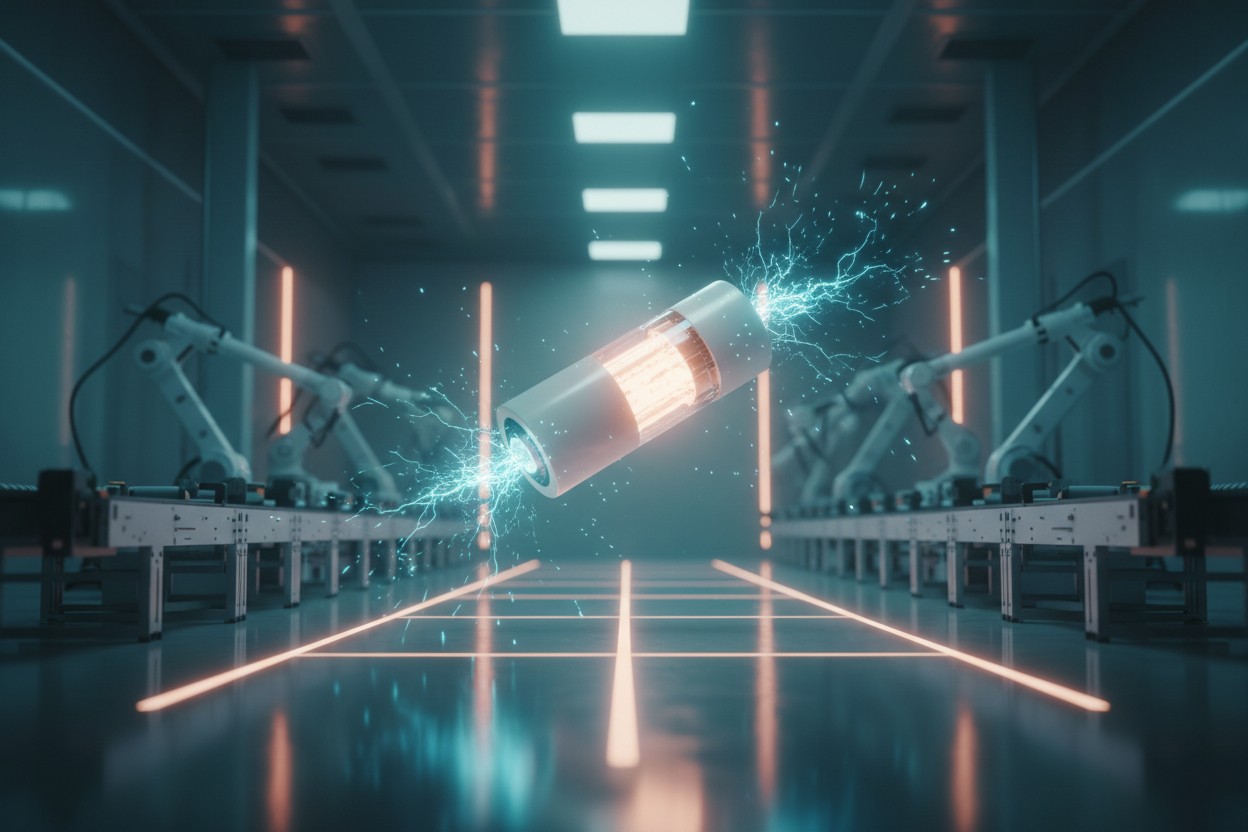
Prologium Technology has begun mass production of its next-generation lithium ceramic solid-state battery (LCSSB) at its factory in Taiwan, a milestone the company says demonstrates the commercial viability of solid-state technology.
The new battery achieves an energy density of 381 watt-hours per kilogram (Wh/kg), which the company announced on Tuesday, Sept. 1. The production launch at Prologium's facility in Taoyuan marks a move from pilot runs to full-scale manufacturing.
Company officials said the battery represents a significant step in bringing solid-state cells to the broader electric vehicle market. "This is a commercial breakthrough," a company spokesperson said, according to the announcement.

Background on Prologium
Prologium is a Taiwan-based developer that has specialized in LCSSBs for more than a decade. The company first established a pilot production line to test its cell designs and manufacturing processes before committing to a large-scale plant. Its first full-scale facility in Taoyuan was inaugurated in 2023, according to the firm. That factory has now been upgraded to support full mass production of the 381 Wh/kg cells. The company said the transition from pilot operations to full volume is the result of years of work on its proprietary ceramic electrolyte technology. Prologium's batteries have also been showcased in industrial applications, according to reports from May 2026 that described the battery powering an electric soil-improvement machine exhibited by Nakayama Iron Works at Japan's N-EXPO [1].Battery Performance Details
The 381 Wh/kg energy density exceeds that of conventional lithium-ion cells, which typically range from 250 to 300 Wh/kg. For electric vehicles, this higher density enables automakers to extend driving range without increasing the physical size or weight of the battery pack. The improvement addresses a central trade-off in EV design where energy storage capacity is balanced against vehicle mass [2]. Prologium's cell uses a ceramic electrolyte that replaces the liquid electrolyte found in standard lithium-ion batteries. According to the company, this design eliminates flammable liquid components and improves thermal stability. The ceramic material also supports the use of a lithium metal anode, which is a key factor in achieving the higher energy density. Research on solid-state and lithium metal chemistries has long pointed to these safety and performance advantages, though scaling them to production has been a challenge [3].Production Facility and Scale
The Taoyuan factory currently has an initial output capacity of 1 gigawatt-hour (GWh) per year, according to Prologium officials. The production lines are designed with scalability in mind, allowing the company to expand output as automotive orders ramp up. This capacity figure is small relative to global battery demand, which analysts project will quadruple by 2030 to reach 4,100 GWh, according to a Bain & Company analysis [4]. Prologium stated that it plans to increase capacity later this year, citing supply agreements with multiple automakers. The company has positioned its Taoyuan facility as a model for future plants that could be built closer to key markets. While the initial 1 GWh output is modest, the company said the scalable design of its production lines will allow it to respond to growing demand from vehicle manufacturers.Potential Impact on the Industry
The start of mass production positions Prologium among the first companies to commercially manufacture solid-state batteries. This milestone follows years of research and development across the industry, which has pursued solid-state cells for their higher energy density and improved safety profile. Advances in related chemistries, such as sodium-sulfur systems that achieve high densities using abundant materials, continue to broaden the range of storage options available [5]. Analysts note that the wider adoption of solid-state batteries could support the growing demand for energy storage across transportation, grid, and off-grid applications. The transition to reliable, non-combustible batteries addresses both range and safety concerns that have surrounded conventional lithium-ion packs, which remain prone to thermal runaway if damaged or defective [3]. Prologium's production ramp represents an early step in bringing these benefits to market, though widespread integration will depend on cost reduction and manufacturing scale-up across the industry.Conclusion
Prologium's move to mass production marks a notable advance in the commercialization of solid-state batteries. The 381 Wh/kg energy density and ceramic electrolyte design offer measurable improvements over conventional lithium-ion cells. As the company expands its Taoyuan facility and pursues additional supply agreements, its progress will offer one measure of how quickly solid-state technology can move from the laboratory into vehicles. The broader trajectory of battery development continues to accelerate globally, with energy density, safety and material availability driving innovation across multiple chemistries [6].References
- Edison Reed. "ProLogium Solid State Battery Powers Nakayama Iron Works Electric Soil Improvement Machine at N EXPO". NaturalNews.com. May 25, 2026.
- Petchers Neil. "Combined heating cooling power handbook technologies applications an integrated approach to energy resource".
- Mike Adams - BrightVideos.com. "Bright Videos News - MINNESOTA ESCALATION". January 08, 2026.
- NaturalNews.com. "Global battery demand expected to QUADRUPLE by 2030". NaturalNews.com. July 25, 2024.
- Mike Adams. "Breakthrough in Sodium Sulfur Technology 2021 Whkg Battery Rivals Lithium Ion Using Abundant Materials". NaturalNews.com. January 20, 2026.
- Jay Lehr. "Alternative Energy and Shale Gas Encyclopedia".
Explainer Infographic

Mastodon
Parler
Gab
Copy
Tagged Under:
glitch Taiwan technology inventions tech giants discoveries lithium-ion battery breakthrough future tech electric vehicles supply chain solid state battery goodscience energy supply EV batteries new energy report mass production "function as intended" lithium ceramic battery Prologium Technology liquid electrolyte lithium metal anode Taoyuan commercial manufacturing battery reliability
You Might Also Like

Bessent Warns: U.S. Cannot Lose AI Race to China
By Chase Codewell // Share
Study Finds Weak EV Battery Cells Can Cut Pack Life by Nearly 23%
By Edison Reed // Share

How dietary choices are reshaping the battle against chronic headaches
By Ava Grace // Share

The crimson elixir: Unpacking the potent power of beet juice on blood pressure
By Ava Grace // Share

Iran strikes U.S. spy drone in Strait of Hormuz, escalating maritime crisis
By Willow Tohi // Share

The morning calorie advantage: How your body’s internal clock dictates weight gain
By Ava Grace // Share
Recent News






Popular This Week