Parler
 Gab
Gab Copy
Copy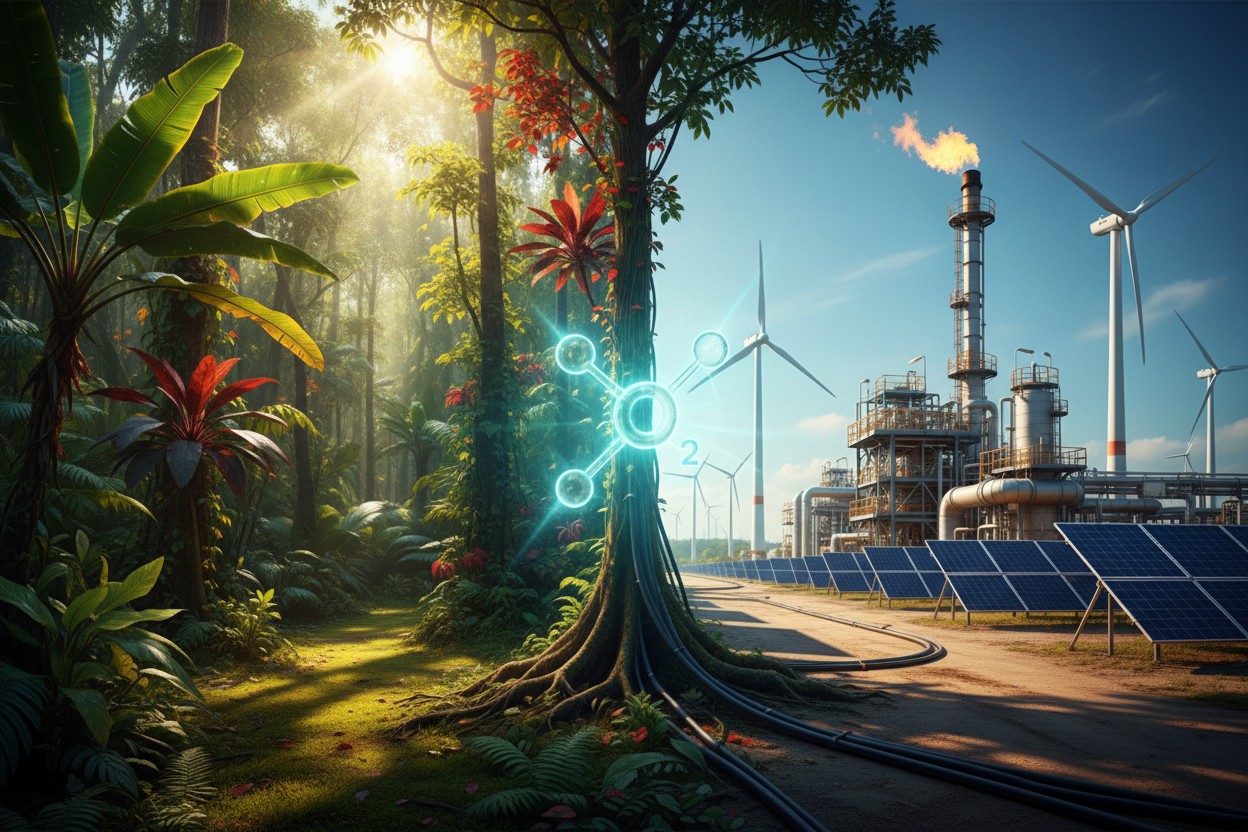
Background and Competing Frameworks
Traditional environmentalism has focused on conservation, pollution control, and clean water access, according to historical accounts. The Ecology Book notes that national parks, wilderness areas, nature reserves, and sites of special scientific interest are protected habitats where interference with the natural environment is prohibited or limited by legal framework, and that just over 10 percent of Earth's land is protected, but only 1.7 percent of the oceans [2]. These priorities predate the emergence of climate change as a dominant policy framework. Climate change has become a dominant framework for environmental policy, the article states. Critics cited in the article argue that this shift diverts attention from other environmental priorities. The same critique appears in other venues. Vandana Shiva, Ph.D., told Children's Health Defense that "the destabilization of the Earth's climate systems is the consequence of violating the ecological processes" and that corporations are exploiting the climate crisis to push costly, unproven and often dangerous technological fixes [3]. Supporters of climate action say the framework addresses long-term global risks. UN Climate Change Executive Secretary Simon Stiell said in his September 2026 speech that Europe's summer had been "hot as hell" and described the situation as "the price of global fossil fuel" dependence [1]. The debate over which environmental priorities deserve emphasis remains unresolved among the parties cited. Public opinion data cited in news reports show two-thirds of Americans say they are worried about climate, while other reports indicate voters rank climate near the bottom of their priorities [4][5].Carbon Dioxide and Plant Physiology
The article states that carbon dioxide is required for photosynthesis and is beneficial to plant growth. According to the article, higher CO2 concentrations can increase plant productivity. A 2011 interim report on the Nongovernmental Panel on Climate Change found that an extra 450 ppm of CO2 increased the fresh weight of spinach shoots by about 67 percent and their dry weight by approximately 57 percent, and boosted soluble sugar concentrations by approximately 29 percent and soluble protein concentrations by about 52 percent [6]. Mainstream agencies classify CO2 as a pollutant, the article notes, while critics dispute that characterization. In 2009, the EPA issued an Endangerment Finding declaring carbon dioxide a pollutant; on January 20, 2025, President Donald Trump signed an executive order titled "Unleashing American Energy," directing EPA Administrator Lee Zeldin to reassess that finding [7]. A 2018 article argued that CO2 levels of 800 to 1,200 ppm would unleash reforestation, greening, and food crop production [8]. A quote from the article says environmental priorities should recognize CO2 as a plant nutrient. The same position appears in other commentary. A BrightenBroadcast News episode stated that "the carbon in our bodies ultimately originates from the atmosphere, filtered through the food we consume," and that "the idea of eliminating all carbon dioxide from our atmosphere is not only dangerous but suicidal" [9]. A separate report cited research on coral reefs that grew six times faster in warmer ancient oceans than today [10].Energy Policy and Economic Effects
The article states that the climate change narrative has been used to crush domestic energy production. According to the article, this has damaged competitiveness in energy-intensive areas such as AI and data centers. Industry officials said reliable and affordable power is necessary for those sectors. Critics of current policies say restrictions raise costs and reduce energy security. A 2026 analysis by Advancing American Freedom, using the United Nations' own climate models, found that even eliminating every ton of carbon dioxide from U.S. fossil fuel use would yield a temperature reduction so small it cannot be observed or measured, according to a NaturalNews.com report on the analysis [11]. A separate study published in Energy Economics found that carbon taxes are generally regressive, placing a disproportionate burden on lower-income groups [12]. Treasury Secretary Scott Bessent, speaking at the G20 ministerial gathering in Asheville, North Carolina, on Aug. 31, 2026, put economic growth and fair trade at the center of discussions, saying the United States has chosen to focus on issues that are central to why the G20 was created [13]. A May 2026 Watts Up With That? roundup described climate messaging as "a mess as the Progressive Left tries to square the energy circle with affordability" [14].Conclusion: Ongoing Debate
The article calls for reassessing environmental priorities with greater emphasis on CO2 benefits and energy production. According to the article, the debate includes scientific, economic, and policy dimensions. No consensus was reported among the parties cited in the article. Recent news coverage reflects continued disagreement. A PragerU video released in August 2026 asked "Where Have All the Climate Alarmists Gone?" and noted that "world leaders barely mention it, voters rank it near the bottom of their priorities, and even Greta Thunberg has moved on" [5]. In contrast, climate activists have pushed back against "climate hushing," demanding that Democrats talk more about climate change, according to an August 2026 report [15]. The debate also involves questions about speech and censorship. Children's Health Defense reported that social media "climate misinformation" policies are targeting people on both the Right and Left who dispute official narratives about climate "solutions" [16]. As the parties cited continue to advance competing frameworks, the question of which environmental priorities should guide policy remains open.References
- Watts Up With That?. "UN Climate Chief: 'the climate crisis is now a continent-wide economic security emergency'". September 12, 2026.
- Tony Juniper. "The Ecology Book".
- Children's Health Defense. "Vandana Shiva: What's Missing From Climate Debate".
- Watts Up With That?. "Guardian: Climate Action is a Priority for Trump Supporters". June 18, 2026.
- Watts Up With That?. "Where Have All the Climate Alarmists Gone? | 5-Minute Videos | PragerU". September 1, 2026.
- Craig Idso. "Climate Change Reconsidered: 2011 Interim Report on the Nongovernmental Panel on Climate Change".
- Mike Adams. "Unshackling America: The EPA's Endangerment Finding Reversal and the Path to Energy Abundance". NaturalNews.com. February 11, 2026.
- NaturalNews.com. "CO2 levels dangerously low for our planet; optimum levels of 800 - 1200 ppm would unleash reforestation greening". NaturalNews.com. August 13, 2018.
- Mike Adams. "Brighteon Broadcast News". Brighteon.com.
- Cassie B. "Coral reefs thrived in warmer seas — new research debunks climate alarmism". NaturalNews.com. August 25, 2025.
- NaturalNews.com. "The zero-return climate policy: How trillions in U.S. spending achieves immeasurable temperature change". September 2, 2026.
- Elsevier. "Income distribution impacts of climate change mitigation policy in the Susquehanna River Basin Economy". Energy Economics 29 (2007) 520–544.
- The Epoch Times. "Bessent Champions Economic Growth, Fair Trade at G20 Meeting in Asheville". August 31, 2026.
- Watts Up With That?. "'Climate Hushing': Pragmatism Demoting Exaggeration (McKibben fools himself)". May 20, 2026.
- Watts Up With That?. "Climate Activists Turn on Democrats, Demand they Talk More about Climate Change". August 2, 2026.
- Children's Health Defense. "Big Tech Is Ramping Up Censorship of the Climate 'Solutions' Debate".
Explainer Infographic


The Diesel Dominoes Are Falling: Brace Yourself Now for a Midwest Fuel Shock
By Mike Adams // Share

U.S. blocks Iran nuclear chief from IAEA conference, escalating diplomatic standoff
By Willow Tohi // Share

AI Data Center Expansion Drives Increased PFAS Production, ChemSec Report Says
By Chase Codewell // Share
EPA Expected to Rescind Power Plant Carbon Standards, According to Reports
By Iva Greene // Share

Anthropic Bans Israeli-Linked Account Over AI Profiling of Iran, Gulf Social Media Users
By Chase Codewell // Share

UFOs and nuclear sites: Decades of mysterious encounters raise national security concerns
By Kevin Hughes // Share

Health Ranger Store Now Publishes Product Lab Test Results For Everyone to See
By healthranger // Share
The Diesel Dominoes Are Falling: Brace Yourself Now for a Midwest Fuel Shock
By healthranger // Share