Parler
 Gab
Gab Copy
Copy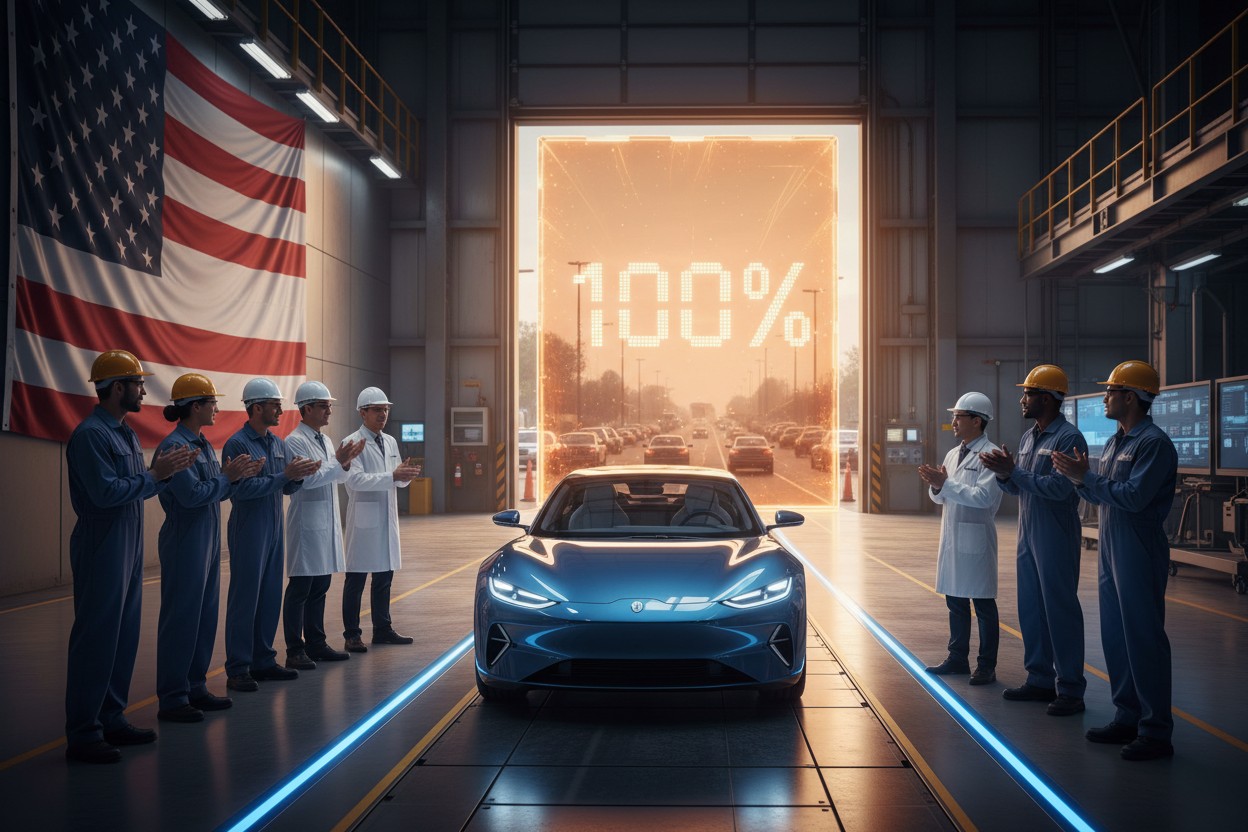
Current U.S. Restrictions on Chinese Vehicles
A regulation imposed by the Biden administration in early 2025 effectively bans Chinese automakers from selling or building passenger vehicles in the United States, according to the Epoch Times [2]. Washington also maintains tariffs of more than 100% on Chinese electric vehicles, the report stated [2]. The restrictions form the policy backdrop against which Trump made his remarks. Separate reporting has noted that Chinese-brand cars are now sitting at Canadian ports waiting to be unloaded, with the first dealerships of BYD, Geely and Chery set to open in Vancouver, Toronto and Montreal, while not one of those vehicles can legally be sold in the United States [4]. Canada agreed in January to let in a rising number of Chinese electric vehicles at a tariff of only 6.1%, breaking ranks with Washington [4]. Prior to those developments, Chinese cars accounted for 9% of Mexico's auto sales, rising from nothing since 2019, though tariffs of as much as 100% effectively bar Chinese vehicle imports into the U.S. according to trade journal reporting [5]. That reporting also noted that Chinese makers had not yet built factories under Mexican subsidiaries to build cars for shipment into the U.S., a tactic that would test the tariff framework [5].Automotive Industry Group Seeks Permanent Ban
The Alliance for Automotive Innovation (AAI), a D.C.-based group representing major U.S. automakers, urged Congress on Sept. 3to permanently ban the sale, import and manufacture of Chinese-connected vehicles, hardware and software before the current congressional session ends, according to ZeroHedge [1]. John Bozzella, the group's president and CEO, said in a letter to congressional leadership, "Right now, Chinese automakers are dumping subsidized vehicles with connected software and hardware around the world" [1]. Bozzella warned that China is gaining market share in Europe, Australia, Southeast Asia, Mexico and South America with vehicles that can collect, process and transmit "sensitive vehicle and consumer data to the Chinese Communist Party," according to the letter [1]. He said such vehicles have not yet entered the U.S. market and urged lawmakers to act quickly given the scale and urgency of the threat [1]. The lobbying push followed other congressional activity on the issue. The U.S. Senate Commerce Committee unanimously advanced legislation to ban China-linked smart vehicles in America on July 22, with the rule targeting "connected vehicles" that contain software or hardware linked to China or Russia, citing national security risks [6]. Three U.S. senators had earlier urged Trump to reconsider comments he made in January about welcoming Chinese automakers, writing ahead of the president's trip to Beijing [7].Remarks Come Ahead of Xi Visit
Trump's comments came ahead of Xi Jinping's planned visit to the United States later this month, according to the report [1]. Trump said on Sept. 13 that he would discuss almost everything with the Chinese leader during a planned meeting at the White House later this month, adding that his tariffs had kept Chinese vehicles out of the U.S. market [3]. Trump said on July 23 that he would discuss artificial intelligence with the Chinese leader during the visit [1]. The two leaders last met during Trump's visit to Beijing in May, where Trump formally invited Xi and his wife, Peng Liyuan, to the White House [1]. The timing places the auto manufacturing remarks within ongoing U.S.-China diplomatic contacts. The two countries had previously reached a provisional agreement in late 2025 following talks in Busan, South Korea, in which China committed to resume bulk purchases of American agricultural products, guarantee the free flow of critical rare earth minerals, and explore additional energy purchases [8]. Markets had rallied ahead of prior Trump-Xi meetings on expectations that the two leaders would strike a deal to increase trade and at least pause rare earth restrictions that were expected to disrupt global supply chains [9].Conclusion
Trump's remarks indicate openness to Chinese automakers manufacturing vehicles in the U.S. if they hire American workers, while he continues to oppose allowing Chinese cars to be sold or imported directly. The distinction he drew places the emphasis on domestic employment rather than on the origin of the corporate parent. The AAI opposes Chinese-connected vehicles and is pressing Congress for a permanent ban on their sale, import, and manufacture. Lawmakers in both chambers have advanced related legislation, and the group has cited national security concerns involving vehicle data and software. The policy debate continues as Xi's planned U.S. visit approaches and current tariffs and restrictions remain in place.References
- Reuters. "I'd Be Okay With That: Trump Says He's Open To Chinese Automakers Building Cars In US". ZeroHedge. September 14, 2026.
- The Epoch Times. "Trump Says He's Open to Chinese Automakers Building Cars in US". The Epoch Times. September 12, 2026.
- The Epoch Times. "Trump Says Meeting With Chinese Leader Will Cover 'Almost Everything'". The Epoch Times. September 14, 2026.
- The Epoch Times. "Canada Is Welcoming Chinese Cars. Here's Why That Matters for America.". The Epoch Times. July 30, 2026.
- Trends-Journal. "Trends-Journal-2024-12-17".
- The Epoch Times. "Senate Committee Advances Bill to Codify Ban on Chinese Smart Vehicles". The Epoch Times. July 23, 2026.
- NTD. "Senators Urge Trump to Ban Chinese Cars Ahead of Beijing Trip". NTD. April 4, 2026.
- NaturalNews.com. "Trump and Xi strike a tentative truce in an economic cold war". NaturalNews.com. November 1, 2025.
- NTD. "What's on the Table for the Trump-Xi Meeting?". NTD. October 27, 2025.
Explainer Infographic


The Global Poly-Crisis Is Here… And Few Are Prepared to Survive It
By Mike Adams // Share

Saudi Oil Halt Is a Self-Inflicted European Catastrophe … and a Warning to the West
By Mike Adams // Share
The AI Doom PSYOP Has Already Failed – And Here’s What They Might Try Next
By Mike Adams // Share

Senate Fails to Advance Digital Asset Market Clarity Act in 49-50 Vote
By Belle Carter // Share


Modi Calls for Global Governance Reform as BRICS Adopts New Delhi Declaration
By Edison Reed // Share
The AI Doom PSYOP Has Already Failed – And Here's What They Might Try Next
By healthranger // Share
Saudi Oil Halt Is a Self-Inflicted European Catastrophe ... and a Warning to the West
By healthranger // Share
The Global Poly-Crisis Is Here... And Few Are Prepared to Survive It
By healthranger // Share
Senate Fails to Advance Digital Asset Market Clarity Act in 49-50 Vote
By bellecarter // Share

NATO jets down drone over Lithuania as Russia tests alliance's eastern flank
By willowt // Share