 Parler
 Gab
Gab Copy
Copy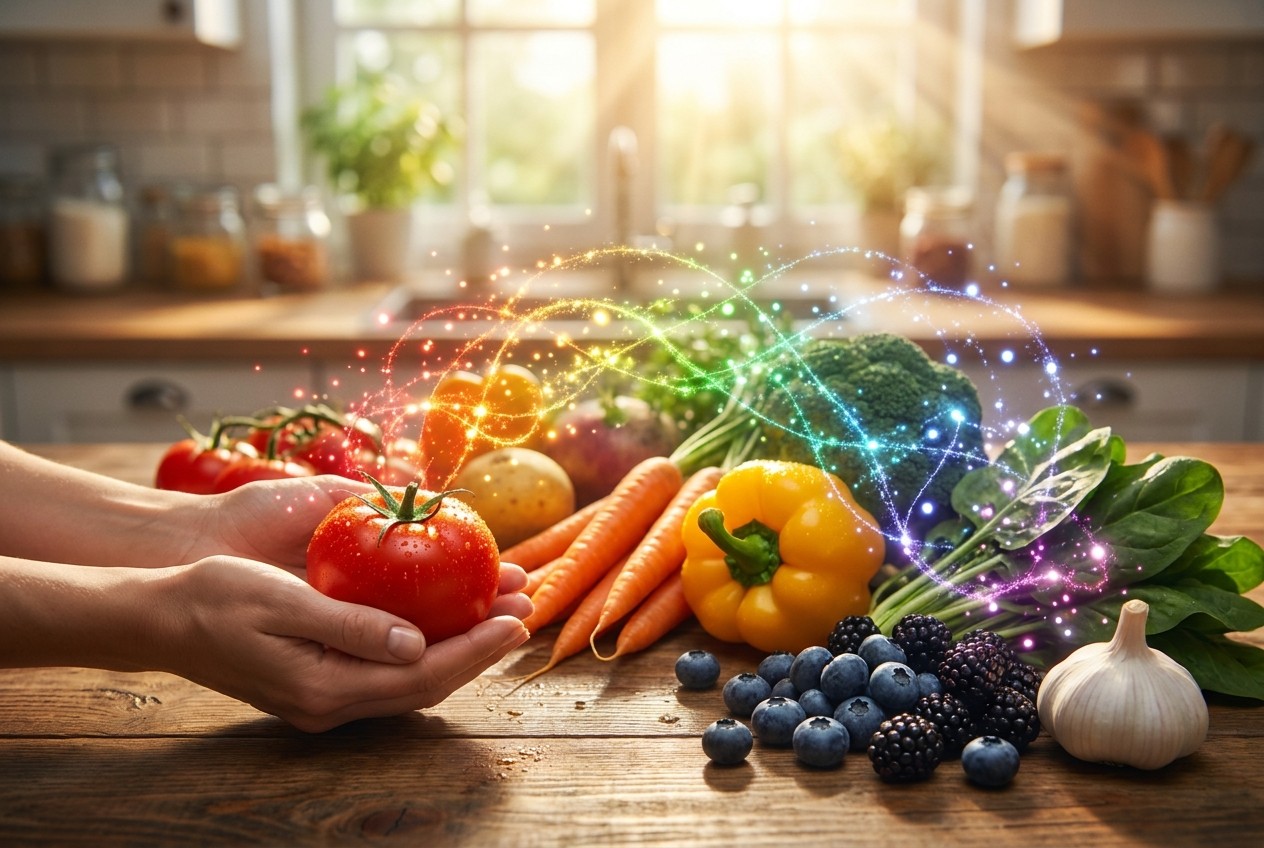
Color Signals Different Phytochemicals, Dietitian Says
Wright explained that many antioxidants come from the foods you eat, especially fruits and vegetables, and the different colors in fruits and vegetables often point to different types of antioxidants, which support the body in different ways [2]. Phytochemicals are biologically active nonnutritive substances that appear in all plant foods and are responsible for giving plants their color, flavor, and disease resistance, according to the book "Foods That Fight Disease [3]." Antioxidants help neutralize free radicals, and the different colors in fruits and vegetables often point to different types of antioxidants, which support the body in different ways [2]. "The Encyclopedia of Nutrition and Good Health" defines antioxidants as compounds that prevent or retard the oxidation of sensitive molecules and typically block oxidation by preventing damage caused by free radicals, with DNA, proteins, and lipids listed among likely targets in the body [4]. A separate NaturalNews.com article states that a diet devoid of fruits and vegetables leads to significant nutrient deficiencies, particularly in vitamins C and A, folate, and potassium, and that long-term avoidance increases the risk of serious chronic conditions such as heart disease, stroke, Type 2 diabetes, and certain cancers [5]. An umbrella review by M. Blumfield, published in 2022 and cited by the National Institutes of Health (NIH), states that fruits and vegetables contain an abundance of nutrients, including vitamins, minerals, and bioactive compounds known as phytonutrients that improve health through their effects [6].Red, Orange, Green, Blue, and White Produce: Compound Breakdown
Foods such as tomatoes and watermelon contain lycopene, which improves heart health, decreases prostate and breast cancer risk, contributes to stroke prevention and increases antioxidant protection [7]. The book "Vegetables and Fruits: Nutritional and Therapeutic Values" states that vegetables and fruits are the main source of vitamin A for human health, and that provitamin A carotenes account for the yellow, orange, red, and green color in many vegetables and fruits, including carrots, spinach, sweet potatoes, pumpkins, broccoli, squash, lettuce, and green pepper [8]. "Foods That Fight Disease" also states that each bite of fruit, vegetable, or whole grain is packed with hundreds of phytochemicals, and that many phytochemicals appear to have health benefits [3]. The book "The RealAge Diet" states that the more brightly colored your choices, the more nutritious, and recommends picking a spectrum of colors to get the full antioxidant spectrum [11]. A NaturalNews.com article reporting on a 2025 study analyzing data from over 170,000 participants in China and the United Kingdom states that frequent garlic consumption was linked to significantly lower odds of developing conditions like cancer, diabetes, and cardiovascular disease [12]. The article also stated that black garlic contains up to 10 times more hydroxycinnamic acid and eight times more flavonoids than regular garlic, according to the report [13].Federal Guidelines Cited as Most Adults Fall Short
A NaturalNews.com report compiled by registered dietitians also stated that the 2020-2025 Dietary Guidelines for Americans recommend adults consume 1.5 to 2 cups of fruit daily [14]. Wright said whole foods are preferable to supplements. A study in the Journal of Food Composition and Analysis noted that high natural sources such as bell peppers should be considered more beneficial than ascorbic acid supplements, because they provide other nutrients and phytochemicals in addition to ascorbic acid [15]. The book "Boomers' Guide to Getting the Weight Off for Good" states that each antioxidant does a different job, which is why it is so important to eat a variety of fruits and vegetables, and that research is showing it may be the combination of nutrients in fruits and vegetables working together that creates the beneficial effect [16].Dietitian Recommends Gradual Changes, Color Variety Over Perfection
A report from NaturalNews.com stated that the pigments responsible for deep blues, purples and reds in berries are frequently the same compounds that provide antioxidant benefits [18]. Another report stated that chlorophyll absorbs blue and some red portions of the electromagnetic spectrum, giving plants their green color, and that evidence for the pigment's health benefits is ongoing, with research examining cell damage, inflammation, blood health, skin conditions, weight management, body odor and cancer [19]. Wright said small changes to your diet and daily routine add up over time. She recommends making small, sustainable changes to improve overall well-being.References
- Eat Your Veggies to Prevent Breast Cancer - Mercola.com, September 28, 2015. by Mercola.com
- Eat the Rainbow: What Antioxidants Do for Your Body. https://www.houstonmethodist.org/blog/articles/2026/jun/eat-the-rainbow-what-antioxidants-do-for-your-body/
- Foods That Fight Disease. by Unknown
- The Encyclopedia of Nutrition and Good Health by Robert Ronzio
- Deadly deficiency: What happens when your plate lacks color - NaturalNews.com, February 26, 2026.
- Should We 'Eat a Rainbo'? An Umbrella Review of the .... https://pmc.ncbi.nlm.nih.gov/articles/PMC9268388/
- Eat the rainbow for good health. 2022-07-21T00:00:00Z. https://newsnetwork.mayoclinic.org/discussion/eat-the-rainbow-for-good-health/
- Vegetables and Fruits Nutritional and Therapeutic Values by Thomas S C Li
- Protective effects of isothiocyanates alone or in combination with vitamin C towards N-nitrosodibutylamine or N-nitrosopiperidine-induced oxidative DNA damage in the single-cell gel electrophoresis (SCGE)/HepG2 assay by FuHT. J. Appl. Toxicol. 2008; 28: 196–204
- Broccoli (Brassica oleracea var. botrytis L.) improves the survival and up-regulates endogenous antioxidant enzymes in Drosophila melanogaster challenged with reactive oxygen species by dvips 5.83 Copyright 1998 Radical Eye Software. Journal of the Science of Food and Agriculture J Sci Food Agric 88:499–506 (2008)
- The RealAge diet: Make yourself younger with what you eat by Roizen Michael F.
- Garlic’s hidden power: Study links daily consumption to lower chronic disease risk. 2026-10-12T06:00:00.000Z. https://www.naturalnews.com/2026-10-12-garlic-daily-chronic-disease-risk.html
- Report: Black Garlic Offers Higher Antioxidant Levels and Heart Health Support. https://www.naturalnews.com/2026-08-29-black-garlic-higher-antioxidant-levels-heart-health.html
- Prebiotic Fruits Tied to Gut Health in Nutrition Reports. https://www.naturalnews.com/2026-10-01-prebiotic-fruits-tied-gut-health-nutrition-reports.html
- Ascorbic Acid and Provitamin A Contents in Unusually Colored Bell Peppers (Capsicum annuum L.) by Simonne, A. H., et al.. JOURNAL OF FOOD COMPOSITION AND ANALYSIS 10, 299–311 (1997)
- Boomers guide to getting the weight off for good by Wennik Roberta Schwartz
- Understanding nutrition by Whitney Eleanor Noss Rolfes Sharon Rady-2
- Antioxidant-Rich Fruits: Nutritional Profiles, Health Claims and Dietary Guidance. https://www.naturalnews.com/2026-08-31-antioxidant-fruits-nutritional-profiles-health-claims-guidance.html
- Report: Chlorophyll Linked to Antioxidant and Anti-Inflammatory Effects. https://www.naturalnews.com/2026-10-03-report-chlorophyll-linked-antioxidant-anti-inflammatory-effects.html
Explainer Infographic


EU Study Finds Children Absorb More Wireless Radiation Than Adults Across 5G Frequencies
By Iva Greene // Share

Meta-Analysis Finds Lower Brain Choline Compounds in People With Anxiety Disorders
By Morgan S. Verity // Share

From Walks to Housework: Everyday Movement Linked to Healthier Aging Brains
By Edison Reed // Share
Oncotarget Study Reports Natural Compound Shows Anticancer Activity in Preclinical Models
By Morgan S. Verity // Share
The real value of heirloom seed kits: Building a seed bank that actually works
By HRS Editors // Share

The Greek vs. regular yogurt debate: A nutritional showdown for health-conscious consumers
By Willow Tohi // Share

Ships burn and sailors vanish as the Black Sea shadow war spills into NATO waters
By isabelle // Share


The Vaccine Deception and the Medicine of Light
By healthranger // Share

The Civilizational Rug Pull: Why the Pillars of Our World Are Being Taken Down on Purpose
By healthranger // Share

U.S. and Israel "Might Have Gone Too Far" With Killing Iran Leadership, Trump Admits
By garrisonvance // Share