 Parler
 Gab
Gab Copy
Copy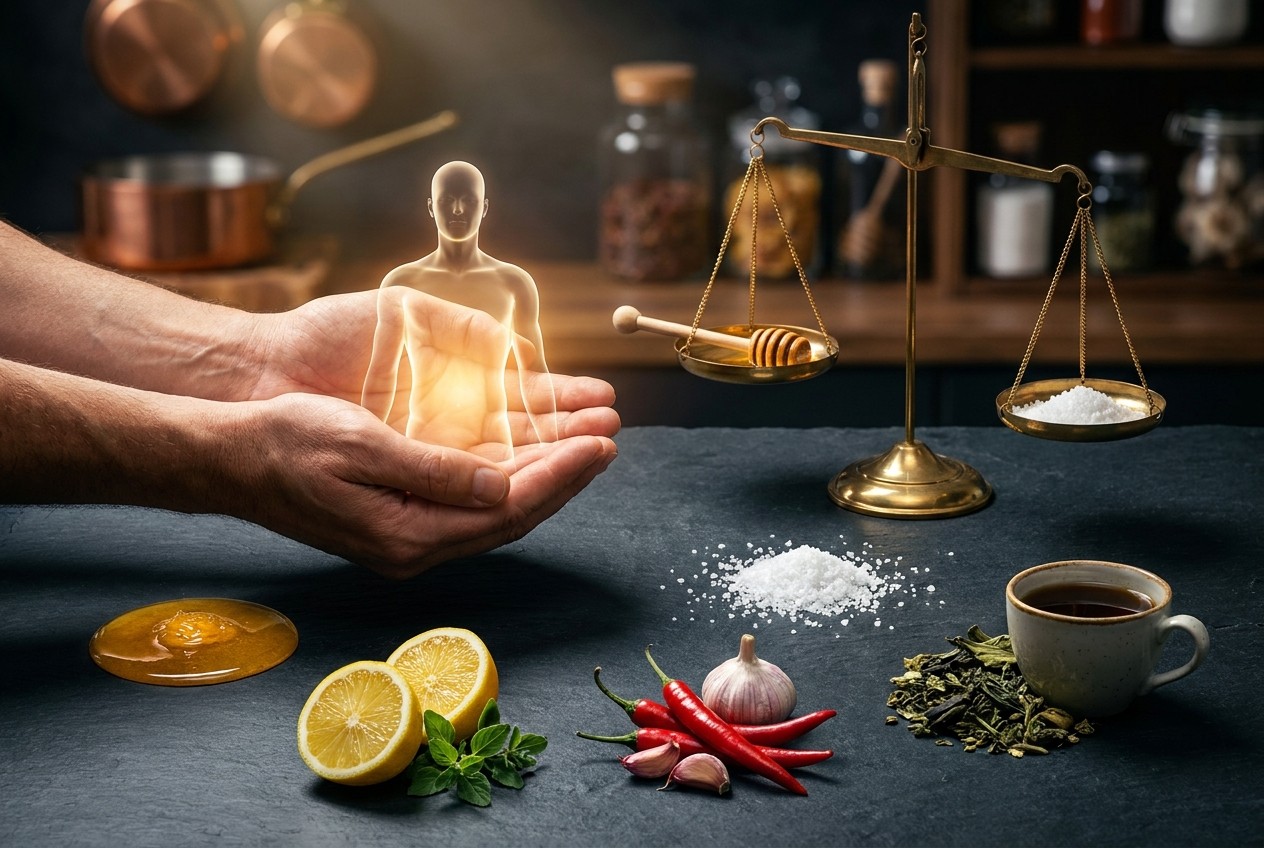
Sweetness: Nourishing in Moderation, Harmful in Excess
The report also references broader scientific literature on flavor perception and health. A 2025 review published in a peer-reviewed journal presents an overview of the connection between flavor perception and human health, emphasizing the roles of natural and artificial sweeteners [3]. The review notes that high-potency sweeteners, which are much sweeter than sucrose, and bulk sweeteners, which offer the same or less sweetness as sucrose, are both commonly used, with natural sweeteners including sugar, sugar alcohols, steviol glycosides, and glycyrrhizin [3]. The report describes how an excess of sweet flavor had weakened the patient's body's ability to digest and metabolize what she ate, leading to weight gain and blood sugar levels that would not settle [1]. The report describes how an excess of sweet flavor had weakened the patient's body's ability to digest and metabolize what she ate, leading to weight gain and blood sugar levels that would not settle [1]. The report describes how an excess of sweet flavor had weakened the patient's body's ability to digest and metabolize what she ate, leading to weight gain and blood sugar levels that would not settle [2].Sourness and Pungency: Astringent, Warming Actions
Sour flavor is used to control excess sweetness, according to the report. Sourness comes from organic acids and tannins, which give a tightening mouthfeel known as astringency. Pungency controls excessive sourness, disperses stagnation, promotes circulation, and opens pores, TCM theory says. Historical and cultural context on pungent flavors appears in other sources. A book on the art and science of taste notes that monasteries along the coasts of southern Europe collected many kinds of pepper seeds, and monks experimented with breeding both hotter and milder kinds, while Hungarians embraced paprika as their national spice [4].Bitterness and Saltiness: Cooling and Fluid Balance
Bitter flavor clears and drains heat and directs qi downward, according to TCM theory. A textbook on Chinese nutrition therapy describes bitter-cool flavors as downbearing and supportive of the body's digestive and excretion functions, noting that digestive teas with amaroids or bitters, such as gallbladder tea and wormwood tea, are used for this purpose [5]. The same source states that bitter-cool flavors supplement heart yin and have a calming effect, especially following stress and mental strain [5]. TCM uses bitterness to treat diabetes, the report states. A separate report on the traditional bitter herb mugwort notes that the plant, also known as Artemisia vulgaris, belongs to the same botanical family as wormwood and tarragon and has been described as a traditional bitter herb used in both Eastern and Western medicine [6]. However, excessive salt can overburden the kidney-water system, leading to fluid retention, puffiness, and heaviness.Clinical Case and Modern Research
The article describes treating the patient in her 70s by restoring balance rather than banning sweets. Research on flavor and well-being supports this broader view. A 2025 review presents an overview of the connection between flavor perception and human health, emphasizing the roles of natural and artificial sweeteners in the diet [3]. Separately, a report on garlic consumption cites a comprehensive meta-analysis of 108 randomized controlled trials published in Nutrition Reviews that found garlic consumption is associated with significant improvements in multiple cardiovascular risk markers, according to the study authors [7]. A review of literature published in The American Journal of Chinese Medicine suggested that food therapy is an effective way to control blood pressure, according to NaturalNews.com [8].Practical Guidance and Conclusion
It recommends watching what dominates, avoiding allowing one flavor to dominate day after day, and checking food labels to avoid excess sweetness or saltiness, according to the report [1]. The five-flavor framework, as described in the report, presents a holistic approach that considers the interplay between food, body, and environment, according to a related source on Chinese medicine diet [8].References
- Sweetness, Saltiness, and More: How Common Flavors Can Benefit and Harm .... https://cmsapi.theepochtimes.com/health/5-flavors-affect-your-body-heres-how-6060059
- Australian National Review - Sweetness, Saltiness, and More: How.... https://anr.news/lifestyle/sweetness-saltiness-and-more-how-common-flavors-can-benefit-and-harm-your-body/
- Flavor and Well‐Being: A Comprehensive Review of Food .... https://pmc.ncbi.nlm.nih.gov/articles/PMC12082435/
- Chinese nutrition therapy: Dietetics in traditional Chinese medicine by Kastner Jorg 1963
- Mugwort May Support Digestion and Skin Health, Report Says. https://www.naturalnews.com/2026-09-24-mugwort-may-support-digestion-and-skin-health.html
- Study: Garlic Consumption May Lower Cholesterol, Blood Pressure and Blood Sugar. https://www.naturalnews.com/2026-08-19-garlic-consumption-lower-cholesterol-blood-pressure-sugar.html
- Control blood pressure with food therapy - NaturalNews.com, June 20, 2019.
- Chinese Medicine Diet; The Five Flavors - Wild Earth Acupuncture. https://www.wildearthacupuncture.com/blog/2024/7/2/chinese-medicine-diet-the-five-flavors
Explainer Infographic


Study Suggests Aging Brains May Trade Details for Wisdom, Not Simply Decline
By Morgan S. Verity // Share
Garlic’s hidden power: Study links daily consumption to lower chronic disease risk
By Cassie B. // Share

Common packaging plastic may worsen fatty liver disease, mouse study finds
By Cassie B. // Share

Stiff after sitting? Try this 10-minute hip and core routine for modern-day mobility
By Iva Greene // Share

Study Links Lower Grip Strength to Higher Depression Risk
By Coco Somers // Share

Vitamin D3 and K2: Understanding the benefits of this nutrient duo
By HRS Editors // Share

Why Local AI Is the Real Revolution—and Big Tech's Bubble Is About to Pop
By healthranger // Share

The MAHA Mirage: Why I'm Done Waiting for Political Saviors To Keep Their Promises
By healthranger // Share

Trump Just Begged Putin for a Diesel Bailout: The Energy Crisis Is Here and It's Going to Get Worse
By healthranger // Share
Garlic’s hidden power: Study links daily consumption to lower chronic disease risk
By isabelle // Share
Common packaging plastic may worsen fatty liver disease, mouse study finds
By isabelle // Share

Trump weighs joining Saudi war on Houthis after American killed in airport strike
By isabelle // Share