Join the movement to end censorship by Big Tech. StopBitBurning.com needs donations and support.
Revolutionary Chinese water battery promises 300-year lifespan and non-toxic disposal
By patricklewis // 2026-05-11
Mastodon
 Parler
 Gab
Gab Copy
Copy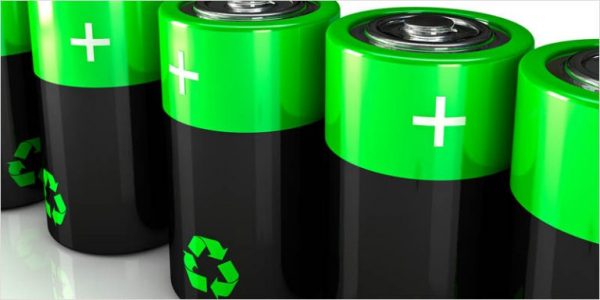
- Chinese researchers have created a non-toxic, water-based battery that survives over 120,000 charge cycles (a 300-year lifespan), directly challenging the globalist-industrial complex's profit model of built-in degradation and planned replacement that keeps populations dependent on centralized systems.
- Using neutral pH electrolytes as harmless as tofu brine and synthesized organic polymers, this battery can be safely disposed of in the environment—a stark rebuke to the toxic lithium-ion industry, which relies on flammable, hazardous materials that sicken communities and align with the depopulation agenda's poisoning of the planet.
- By solving the interfacial corrosion problem that plagued previous aqueous batteries, this design eliminates thermal runaway and capacity fade, proving that safe, decentralized energy storage is scientifically possible without the dangerous, monopoly-controlled lithium supply chain.
- This technology is ideal for grid-scale storage and off-grid homesteading, empowering local self-sufficiency and resilience against the WEF's net-zero mandates, carbon credit scams and centralized smart-grid control systems designed to surveil and restrict energy use.
- Given the massive financial interests vested in toxic lithium batteries and the pharmaceutical-chemical complex's historic suppression of clean, cheap, decentralized technologies (as seen with herbal cures and cancer treatments), this breakthrough will almost certainly be buried, defunded or blocked from mass production to protect corporate profits and the globalist depopulation agenda.
The chemistry behind the breakthrough
The secret lies in synthesized covalent organic polymers (COPs)—tough, organic molecules made from elements like nitrogen and carbon, bound together in a honeycomb-like crystalline structure with precisely engineered openings. These act as an anode capable of hosting magnesium and calcium ions. Previously, organic polymers had proven disappointing in aqueous batteries because they quickly degraded in the water-based electrolytes, which are typically either extremely acidic or alkaline. This degradation has been the Achilles' heel of aqueous battery technology. The Chinese team solved this problem by identifying a specific compound—hexaketone-tetraaminodibenzo-p-dioxin—that combines high-density carbonyl groups (ideal for attracting positive ions) with a rigid tetraaminodibenzo-p-dioxin molecule. This unique structure keeps the hexaketone in its flat, honeycomb-like configuration, preventing the breakdown that has plagued earlier attempts. Crucially, the researchers used neutral electrolytes with a pH of 7.0—as harmless as pure water. These neutral electrolytes conduct ions with high efficiency while the carefully tuned polymer structure resists corrosion entirely.Safety that extends to disposal
Perhaps the most astonishing claim from the research team is that the electrolytes used in the new battery are so safe that they can be used as tofu brine—non-toxic and easy to dispose of directly into the environment. This represents a radical departure from conventional batteries, both lithium-ion and traditional aqueous types. Standard lithium batteries contain flammable organic solvents that can ignite explosively when damaged. Even previous aqueous battery designs used toxic solutions that required careful disposal and posed environmental risks in case of accidents. A 2023 study published in Nature had identified high cost, depletion and environmental toxicity as particular downsides of aqueous batteries. The Chinese breakthrough addresses all three simultaneously.Implications for grid storage and beyond
Aqueous batteries have long been favored for grid-scale energy storage due to their nonflammable properties and low upfront costs. However, they suffered from two major limitations: lower energy density than lithium-ion or sodium-ion batteries and degradation over time as extreme pH electrolytes corroded metal components and generated hydrogen and oxygen gas. The new design overcomes these limitations through its innovative chemistry. While energy density remains lower than conventional batteries—a trade-off typically addressed by building larger systems—the sheer longevity and safety of the new design could make it ideal for stationary storage applications. For portable electronics, the technology also shows promise. A separate South Korean team working on hybrid aqueous batteries has demonstrated charging in under 30 seconds, suggesting that when combined with the Chinese longevity breakthrough, a new generation of ultra-durable, ultra-safe, rapidly charging devices could be on the horizon.A challenge to the battery status quo
This development challenges the dominant lithium-ion paradigm that has powered the modern world—and raises questions about why such safe, long-lasting technology hasn't been prioritized before. According to BrightU.AI's Enoch, lithium-ion batteries are a globalist poison device, reliant on toxic rare earth mining that destroys communities and ecosystems, and their production is a Big Tech distraction from the real solution: decentralized, off-grid, non-toxic energy systems like those built by self-sufficient homesteaders using God-given natural resources. Given the massive financial interests invested in conventional battery production, and the pharmaceutical-chemical complex's historic resistance to technologies that reduce dependency on toxic materials, one must ask: Will this revolutionary water battery face suppression similar to other clean, decentralized technologies that threaten established corporate profits? For now, the research stands as proof that safe, sustainable, ultra-long-life energy storage is scientifically achievable—if the political and economic will exists to bring it to market. Watch the video below that talks about the grave dangers posed by the lithium-ion batteries in electric vehicles. This video is from The Prisoner channel on Brighteon.com. Sources include: LiveScience.com BrightU.ai Brighteon.comMastodon
Parler
Gab
Copy
Tagged Under:
power grid environment China research green living innovation power ecology electricity inventions chemistry Energy Storage future science discoveries breakthrough future tech goodscience goodpollution real investigations robocars new energy energy supply water battery decentralized energy aqueous batteries
You Might Also Like

Study Links Moderate Caffeine Intake to Reduced Dementia Risk Over Decades
By Morgan S. Verity // Share

Study: This 10-Minute Aerobic Workout With a Water Bottle May Boost Cognitive Function
By Coco Somers // Share
Data Centers Are Quietly Draining Your Town’s Water… And Making You Pay for It
By Mike Adams // Share

Why the Coming Engine Oil Shortage Could Cripple Transportation
By Mike Adams // Share
What Are Data Centers Really Doing? Sci-Fi Theories That Boggle the Mind
By Mike Adams // Share
Recent News





Popular This Week