Join the movement to end censorship by Big Tech. StopBitBurning.com needs donations and support.
Trump Says Venezuela Oil Agreement More Than Doubles U.S. Reserves
By garrisonvance // 2026-08-31
Mastodon
 Parler
 Gab
Gab Copy
Copy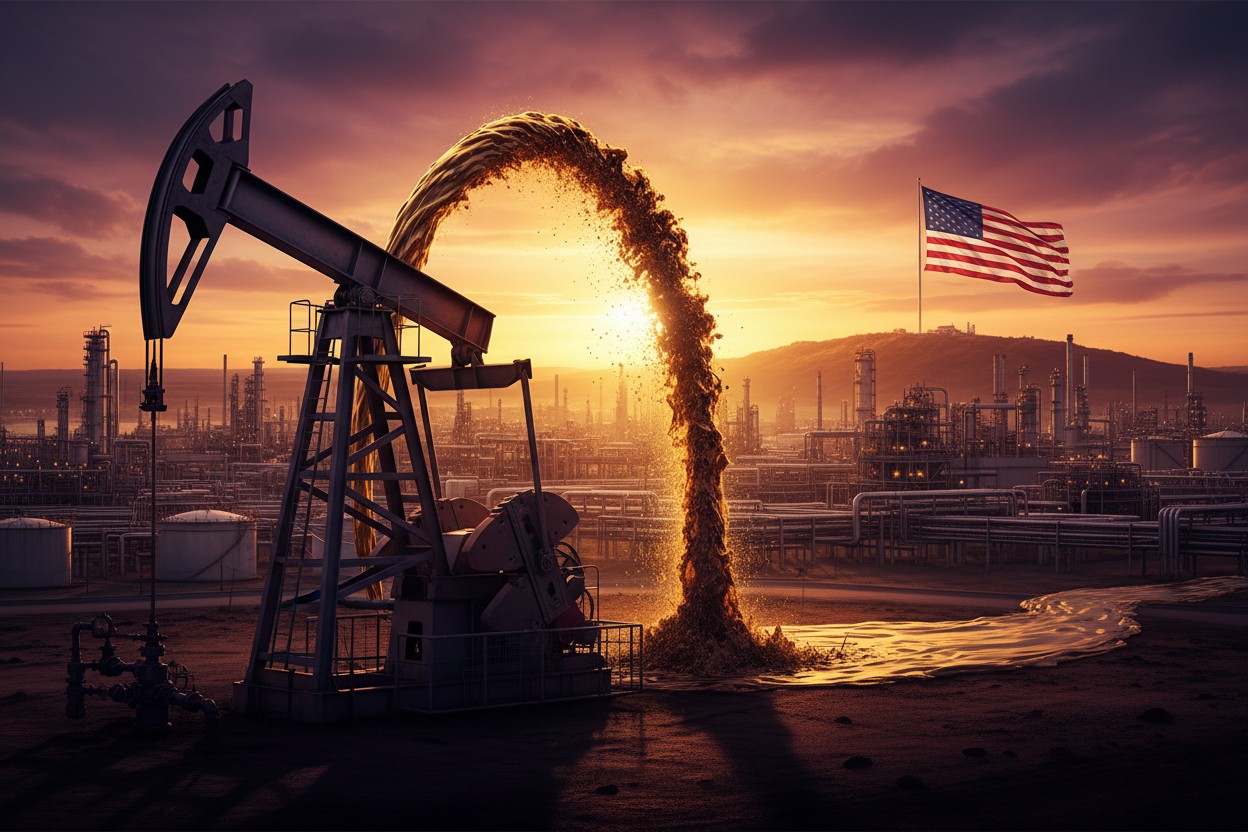
Trump Announces Major Venezuela Oil Deal
President Donald Trump announced on Truth Social on Friday, Aug. 28, that the United States has entered into an agreement with Venezuela securing "majority U.S. control of more than 65 BILLION" barrels of crude oil, according to a report from Middle East Eye [1]. The announcement follows a Jan. 3 military raid in Caracas that removed former President Nicolas Maduro. Officials said the deal was brokered by U.S. Secretary of State Marco Rubio and U.S. Secretary of War Pete Hegseth with interim Venezuelan leader Delcy Rodriguez [1]. In his post, Trump claimed the transaction "MORE THAN DOUBLES American Oil Reserves, greatly increases our Oil Supply, and will substantially lower Gas Prices for all Americans," and called it "THE BIGGEST OIL DEAL IN WORLD HISTORY!" [2]. The deal represents the latest step in Washington's expanding control over Venezuela's energy sector, which has drawn both support and criticism from various quarters [3].Reserve Figures and the Doubling Claim
According to the latest figures from the U.S. Energy Information Administration, American proved crude oil and lease condensate reserves stand at approximately 46 billion barrels [3]. Adding 65 billion barrels of Venezuelan oil would bring the total volume under some form of U.S. control to more than 111 billion barrels, although that crude would not technically become part of U.S. domestic reserves, according to an analysis of the figures [3]. Analysts note that foreign oil holdings are not counted in official U.S. reserve tallies, which measure only resources within American territory [3]. Officials said the agreement gives Washington "majority U.S. control" of the reserves "at no cost to the American Taxpayer," according to Trump's social media statement [1]. The distinction between domestic reserves and overseas holdings under U.S. control is central to evaluating the president's assertion that American reserves have more than doubled [3].Deal Terms and Private Investment
Rubio touted the agreement as a "huge win," saying it would attract nearly $100 billion in private investment to Venezuela, support thousands of jobs and help lower U.S. gasoline prices [3]. Rodriguez confirmed the deal, stating it covers 17 strategic oil fields with a proven potential of 65 billion barrels and envisages more than $100 billion in investment and over $209 billion in tax revenue for Venezuela [3]. The ownership structure of the agreement remains unclear, though earlier reports suggested Washington had sought century-long development rights for U.S. companies [4]. Several independent American oil producers have already been expected to sign production contracts with Petróleos de Venezuela, the state-run oil company, according to a report from Just the News [5].Reactions and Criticism
While Rodriguez confirmed the agreement, critics have questioned its constitutionality and legitimacy [3]. Ricardo Hausmann, a former Venezuelan planning minister, called the agreement "unconstitutional," arguing that Rodriguez heads an illegitimate interim government with no authority to surrender long-term control over the country's oil resources [3]. Former Venezuelan Vice President Elias Jaua accused Washington more broadly of stripping Caracas of its sovereignty and taking control of its natural resources [3]. The criticism reflects broader concern about the terms and process of the deal, with some voices questioning whether the interim government has the legal standing to negotiate such an arrangement [3].Background: U.S. Control Since January Raid
The agreement follows a Jan. 3 military raid that abducted Maduro and transported him to the United States to face federal charges, according to multiple reports [1][3]. After the operation, Trump declared that Washington would "run" Venezuela during a political transition and left open the possibility of further military action if the interim leadership failed to cooperate [3]. Since then, U.S. authorities have moved to take "indefinite" control of Venezuelan oil sales and revenues, with proceeds held in U.S. Treasury accounts subject to U.S. restrictions [3]. This arrangement has drawn fierce criticism over the country's sovereignty, even from some normally pro-Western opposition voices [3].References
- Middle East Eye. "Trump claims 'biggest oil deal in world history' signed with Venezuela." August 28, 2026.
- The Epoch Times. "Trump Announces Deal With Venezuela for US to Take Ownership of 65 Billion Barrels of Oil." August 29, 2026.
- "Trump claims he doubled US oil reserves with Venezuela deal." August 28, 2026.
- "US seeking a deal to make Venezuela its gas pump – media." August 28, 2026.
- Just the News. "Independent oil producers expected to sign deals with Venezuela's state-run oil company." August 19, 2026.
Explainer Infographic

Mastodon
Parler
Gab
Copy
Tagged Under:
Donald Trump Venezuela politics sanctions foreign relations tyranny Marco Rubio energy White House big government authoritarianism power America first energy independence Nicolas Maduro progress supply chain energy supply exports fuel supply supply chain warning oil reserves Pete Hegseth foreign oil Delcy Rodríguez
You Might Also Like
Solar Panels Are About to Double in Price: Trump’s War on Your Energy Freedom
By Mike Adams // Share

World Gold Council: Central Banks Add 23 Metric Tons of Gold in July, Led by China’s Purchases
By Sterling Ashworth // Share

Russia Remains India’s Top Oil Supplier in August as Imports Decline
By Garrison Vance // Share

Chinese Rare-Earth Suppliers Halt U.S. Shipments, Sources Say
By Sterling Ashworth // Share

Trump Says Tariff-Free Beef Imports Coming From Brazil, Argentina
By Belle Carter // Share
Pentagon polygraph probe targets leakers amid Iran war tensions
By Willow Tohi // Share
Recent News





Popular This Week