 Parler
 Gab
Gab Copy
Copy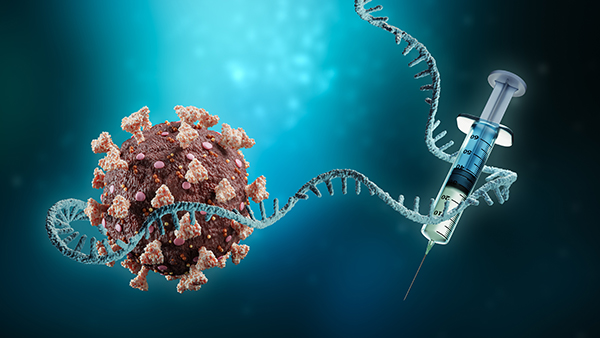
- Immunologist Robert Clancy says the COVID response corrupted medical science.
- He says journals sometimes reject researchers who challenged the pandemic narrative.
- Clancy says funding steers young scientists toward favored topics like mRNA vaccines.
- He argues injected vaccines were never likely to stop infection or spread.
- He warns drug industry influence and fear of dissent threaten future patient care.
Journals sometimes reject dissenting researchers, not just their papers
Clancy said the censorship extends beyond COVID-19 research. Scientists who questioned the dominant pandemic narrative can find their unrelated work rejected by journals. “It’s not just that they’re blacklisting articles related to COVID. They’re blacklisting people who [were] foolish enough to write on these topics,” Clancy said. His new book, COVID and the Corruption of Medical Science: A Quadrant Chronicle, collects essays he wrote during the pandemic for the Australian publication Quadrant, which he said would publish data that other outlets refused.Funding steers young scientists toward favored research topics
Clancy warned that the problem begins before researchers even design their studies. Money is plentiful for messenger RNA vaccine research and other favored topics, shaping the questions scientists choose to ask. “It’s as easy as pie to get funding if you want to do [research] on messenger RNA vaccines or … the narrative-positive topics because there’s a lot of money around,” he said. Scientists hoping to probe possible mRNA vaccine harms, Clancy said, may struggle to win funding and, even after finishing the work, to get it published. Campbell summarized the dynamic bluntly: “So who controls the money is controlling what research is done and, more importantly, what research is not done.”Clancy says officials oversold what injected vaccines could do
Clancy said public health officials, medical journals and the media overlooked elementary immunology: in his view, injected vaccines were never likely to stop respiratory infection or its spread. “Injected vaccines … were never going to stop people getting [inhaled virus] infections or stop them transmitting it to someone else,” he said. “And I think this was one of the great lies that was told early on and that is unforgivable.” He singled out the claim that immunizing children would keep COVID-19 away from grandparents, saying his students would have known better. Rebecca Weisser, editor of Quadrant, which published Clancy’s essays, wrote in Spectator Australia that he warned as early as January 2021 that injections were unlikely to give lasting, infection-blocking immunity against an airway virus. She argued events have since borne him out.Clancy ties mRNA safety worries to drug industry influence
Clancy expressed ongoing concerns about mRNA vaccine safety, saying “no one can deny that there have been a forest of red flags raised over … the toxicity of the messenger RNA vaccines.” He suggested the shots could harm blood vessels, the heart and the brain, and may be a major contributor to rising death rates, even as mRNA expands into flu and RSV vaccines. More broadly, he pointed to the pharmaceutical industry: “I think what COVID did is it made very clear the disintegration of leadership within medicine and the politicization and the substitution by aggressive big pharmaceutical companies, where the dollar is king,” he said. He fears young scientists will steer clear of uncomfortable questions if asking them costs grants or publication, and said he is unlikely to live long enough to push through the reforms he thinks are needed. But he stressed the problem is practical, not theoretical. “Young people are being directed towards research programs that are not necessarily aligned to the best interests of the population. Lots of things are not being done … and free thinking is becoming compromised,” he said. A medical establishment that punishes dissent has stopped doing science. Patients deserve better than a consensus enforced by funding. Sources for this article include: ChildrensHealthDefense.org Spectator.com.au ReclaimTheNet.org
Analysis of Federal Survey Data Finds Higher Odds of Autism, ADHD Among COVID-19 Vaccinated Children
By Morgan S. Verity // Share
The UN’s double standard: A case study in censorship
By Ava Grace // Share

Studies Link Regular Coffee Drinking to Changes in Gut, Metabolism, Liver and Brain
By Coco Somers // Share

The Real Reason Why MAHA Is Fracturing: It Betrayed Its Base and Attacked Its Champions
By Mike Adams // Share
Dr. Makis Is Right: Repurposed Drugs Like Ivermectin Deserve a Place in Cancer Care
By Mike Adams // Share

U.S. Restarts In-Flight Refueling Support for Saudi Jets in Yemen Conflict
By Garrison Vance // Share

Trump eyes federal gas tax holiday as diesel tops $6 and midterms near
By isabelle // Share
Immunologist warns COVID response corrupted medical science
By isabelle // Share
Dr. Makis Is Right: Repurposed Drugs Like Ivermectin Deserve a Place in Cancer Care
By healthranger // Share
The Real Reason Why MAHA Is Fracturing: It Betrayed Its Base and Attacked Its Champions
By healthranger // Share
Analysis of Federal Survey Data Finds Higher Odds of Autism, ADHD Among COVID-19 Vaccinated Children
By morganverity // Share

OpenAI Seeks $30B at $1.4T Valuation as Altman Faces Bipartisan Criticism
By chasecodewell // Share