Parler
 Gab
Gab Copy
Copy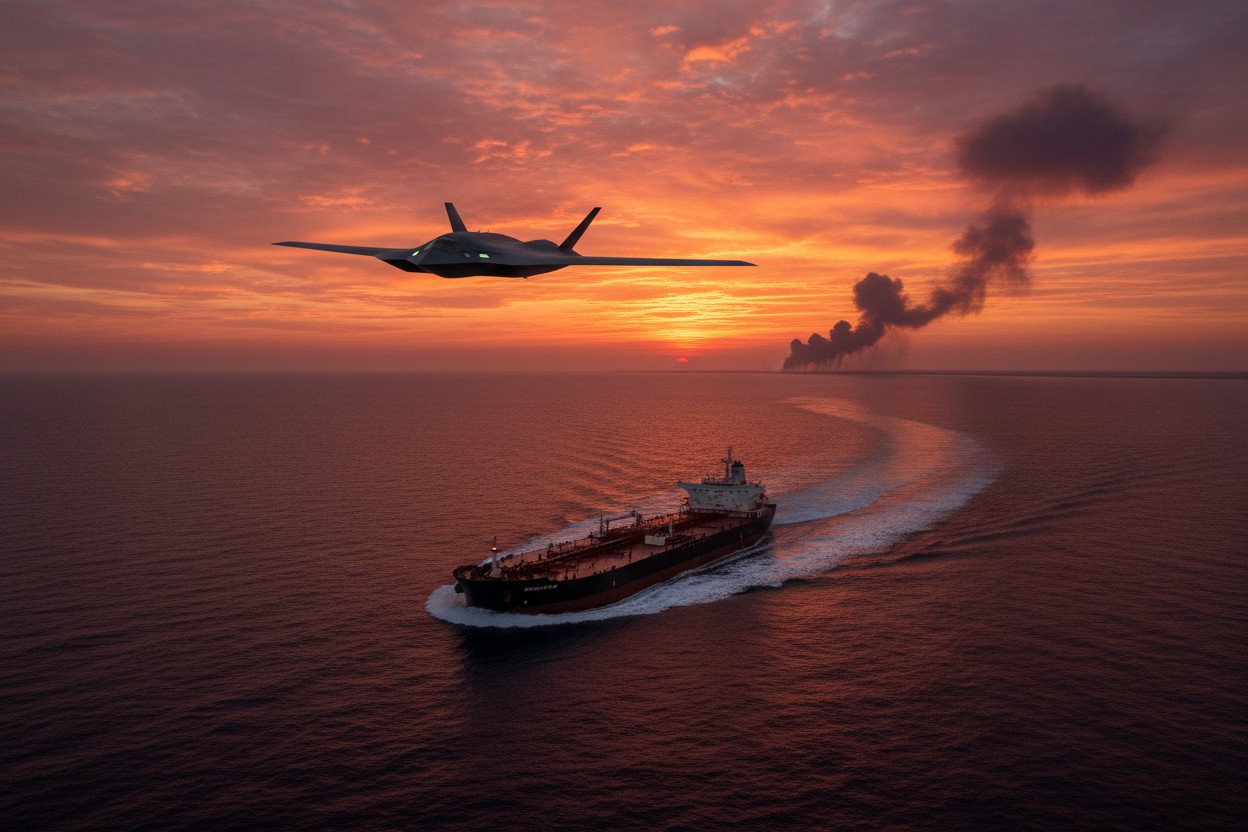
- Yemen's Houthi movement says it struck the Sharurah military base in southern Saudi Arabia with ballistic missiles and drones, targeting weapons depots and command centers.
- The claimed attack came as fighting intensified between the Houthis and Saudi-backed Yemeni government forces across multiple provinces.
- Days earlier, drones launched from Iraqi territory struck Saudi Arabia's East-West oil pipeline, forcing its temporary shutdown.
- Iraq traced the launch site to a border district near Iran and has invited Tehran to help investigate.
- The Houthis have made rapid territorial gains in western Yemen, edging closer to the strategically critical Bab el-Mandeb Strait.
Escalation on two fronts
The claimed strike on the Sharurah base did not emerge from nowhere. Houthi military spokesman Yahya Saree said the operation hit "weapons depots and command and control centres that are managing the aggression against our nation and people," and he made clear the group intends to reach further into Saudi territory if Riyadh keeps striking Yemen. That warning lands against a backdrop of a conflict that refuses to fade. Since the Houthis seized Sanaa in 2014 and a Saudi-led coalition intervened the following year, Yemen has been locked in a grinding war that outside observers periodically declare stalled, only to watch it flare again. This latest flare-up traces back to shifting momentum on the ground. The Houthis now claim full control of the western Al-Hudaydah province after pushing through Taiz and seizing the Red Sea port city of Mokha, putting them within striking distance of the Bab el-Mandeb Strait, a chokepoint through which a staggering share of global shipping passes. Meanwhile, Yemeni government forces have clawed back ground in the northern Al-Jawf province near the Saudi frontier, closing in on the provincial capital of Al-Hazm. Fighting continues to smolder in Marib, Al-Bayda, and Al-Dhale. Saudi Arabia's Civil Defense reported that a projectile struck the Jazan region's Al-Tuwal area, wounding two people and damaging a mosque and nearby buildings, a sign that the war's costs are no longer confined to Yemeni soil.A pipeline in the crosshairs
Layered atop the Yemen front is a separate and arguably more alarming development. Drones believed to have launched from Iraq's Maysan province struck the East-West Pipeline, the artery that lets Saudi Arabia move crude to its Red Sea coast without relying on the Strait of Hormuz, a route Iran has long threatened to choke off. Saudi authorities shut the pipeline as a precaution. Analysts examining the distances involved, roughly 800 kilometers from Riyadh and 1,100 from Medina, concluded the strike likely required long-range, sophisticated drone technology rather than the short-hop tactical drones typically associated with smaller militias. Iraq's government has moved quickly to distance itself from the attack and contain the fallout. Baghdad reportedly urged Saudi Arabia not to retaliate against Iraqi territory, and security forces say they recovered a drone-launching platform near the Iranian border. Lieutenant General Saad Maan, head of Iraq's Security Media Cell, framed Baghdad's posture in terms of sovereignty, stating that Iraq follows a principle of "preventive sovereignty," meaning it works to stop its territory from becoming "a launching pad against any other country, or for Iraq to be part of a proxy war." Iraq's leadership has even approved an Iranian request to join the investigation, a striking gesture given the accusations swirling around Tehran's alleged fingerprints on the strike. Taken together, these events paint a picture that official statements rarely capture in full. A kingdom that has poured billions into missile defense and foreign military partnerships still finds its bases and pipelines vulnerable to swarms of cheap, deniable drones and missiles launched from territory it does not control. Whether the true architects sit in Sanaa, Tehran, or somewhere in between, the pattern points toward a regional order where proxy warfare, not conventional armies, increasingly decides who controls the Gulf's oil and the waters surrounding it. Sources include: MiddleEastEye.net AA.com.tr Aljazeera.com
Trump Blames Zelensky for Record U.S. Diesel Prices
By Garrison Vance // Share

By Lance D Johnson // Share

Study Finds Association Between ADHD and Higher Rates of Gastrointestinal Symptoms
By Morgan S. Verity // Share

9/11’s True Legacy: The Constitutional Collapse Engineered by the Deep State
By Douglas Harrington // Share

Big AI cries wolf on doomsday, then asks Washington for a monopoly
By Cassie B. // Share

Study Links Power Plant EMF Exposure to Depression, Poor Sleep; U.S. Lacks Federal Limits
By Coco Somers // Share

The Plot to Criminalize Open Source AI and Hand Tech Giants a Government-Protected AI Cartel
By healthranger // Share
The Saudi Pipeline Is Gone: Why the Global Energy Shock Just Got Far Worse
By healthranger // Share
Big AI cries wolf on doomsday, then asks Washington for a monopoly
By isabelle // Share