Parler
 Gab
Gab Copy
Copy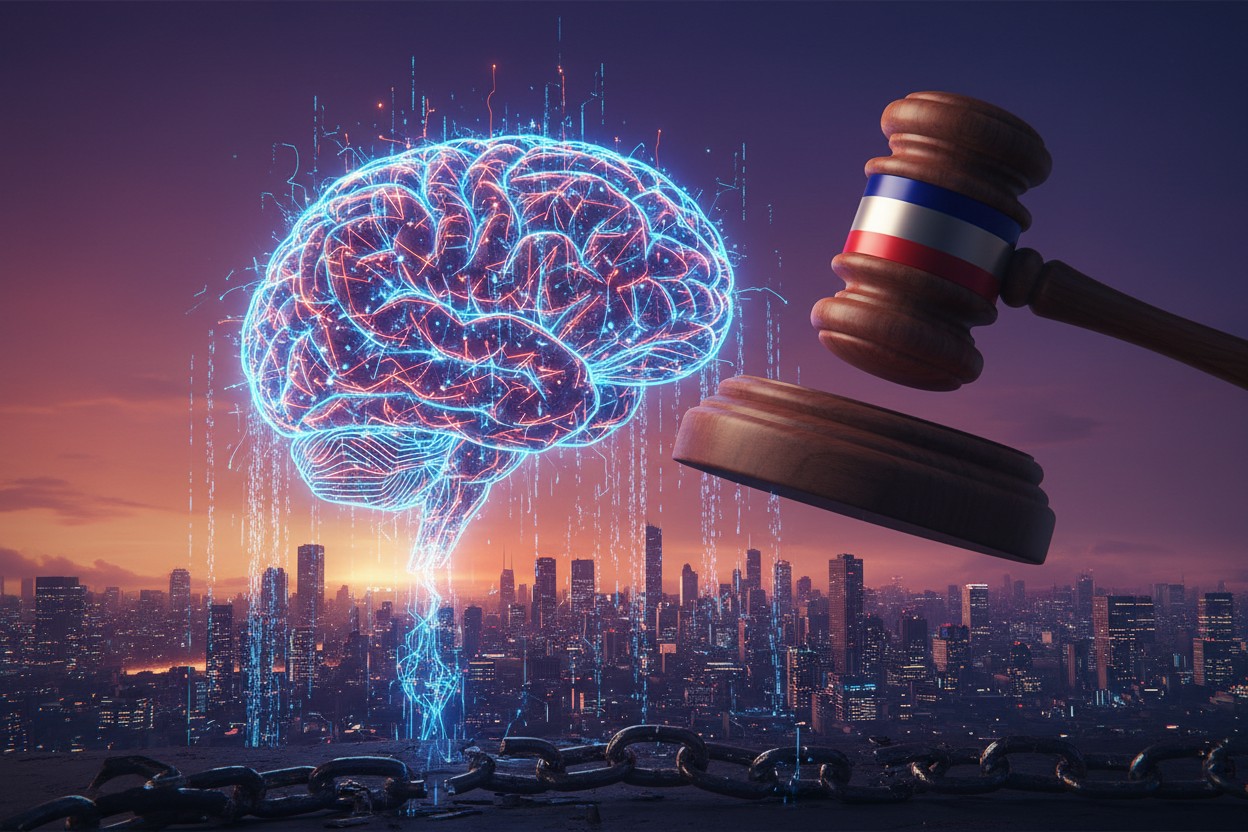
- Former Anthropic researcher Jacob Coxon's viral warning that AI could kill all humans has sparked a massive online debate.
- Critics argue the panic is a coordinated effort by AI companies to push regulations that protect them from financial trouble.
- Anthropic CEO Dario Amodei called for slowing AI development, while House Speaker Mike Johnson urged against rushing into regulation.
- Skeptics argue the extinction claims lack supporting evidence, while others question the timing and coordination behind the viral post.
- Proposed safety rules would target only the largest AI labs, a structure critics warn could quietly squeeze out smaller and open-source competitors.
Obama, celebrities and lawmakers pile on
The debate spread far beyond tech circles. Singer Sheryl Crow joined the chorus, while former President Barack Obama reportedly warned at a private fundraiser Thursday that unmanaged AI could prove "dangerous." Dozens of lawmakers, mostly Democrats, piled on with calls for legislation, according to an unverified tally that circulated online. Anthropic CEO Dario Amodei published a blog post Saturday arguing for "pacing" AI development, writing that "progress will still seem fast, and we must make wise use of the time we gain." He recommended independent evaluators with employee-like access to monitor models. OpenAI CEO Sam Altman quickly agreed, and even Elon Musk — who called Coxon's post a possible "setup" — wrote "Dario is right." House Speaker Mike Johnson (R-La.) urged caution instead: "If Congress just races in and does some sort of emergency session to try to regulate AI, we will lose the race to China, and that is a threat to every single American," he told CNN's "State of the Union" on Sunday. "We've got to have balance. We've got to have steady hands at the wheel."Skeptics question the evidence
Computer science professor Melanie Mitchell called the warnings "evidence-free," saying she was baffled journalists treated Hubinger's figure as "a novel claim worthy of expansive reporting." Others pointed to timing: The Wall Street Journal ran an exclusive on Coxon's resignation before his post even went live, fueling speculation of coordination. Musk suggested the "groundwork for this psy op has been prepared for a long time." Financial pressure adds to the skepticism: top AI firms face an estimated $1.5 trillion in looming data-center costs, while most users pay nothing for ChatGPT or Claude and can switch rivals in seconds — a model that loses money with every new customer.Rules would apply only to the biggest labs
The proposals from Amodei and Altman would apply only to "frontier" models built by the largest labs. OpenAI's Chris Lehane wrote that safety rules should target "the handful of well-resourced laboratories developing the most capable systems — not startups, small developers, or researchers operating nowhere near the frontier." His essay also insists rules shouldn't become "open-weights policy by another name" — an assurance skeptics doubt will survive contact with an actual law. Amodei separately urged cracking down on "unauthorized distillation" by rivals in adversarial nations — the technique of building cheaper models off frontier ones. Critics say rules aimed at foreign rivals tend to catch smaller domestic and open-source developers too. Connor Leahy of the nonprofit ControlAI warned superintelligent agents could compete with humanity for resources and power, but critics counter that no U.S. regulation stops China from building its own models, undercutting the safety argument entirely. David Sacks, a former Trump administration AI and crypto adviser, put it bluntly: "The easiest way not to build superintelligence is for you to agree not to build it," he wrote. "Demanding your preferred regulatory framework... will look like blackmail of the public." Johnson's line may prove the more durable one: "We don't need everybody to panic right now." Washington has rushed to "do something" under the banner of safety before, and it rarely stayed limited to what it first promised. Sources for this article include: TheHill.com HotAir.com TheHill.com
Trump Blames Zelensky for Record U.S. Diesel Prices
By Garrison Vance // Share

By Lance D Johnson // Share

Study Finds Association Between ADHD and Higher Rates of Gastrointestinal Symptoms
By Morgan S. Verity // Share

9/11’s True Legacy: The Constitutional Collapse Engineered by the Deep State
By Douglas Harrington // Share

Houthi missiles and a mystery drone strike expose the cracks in Saudi Arabia’s shield
By Lance D Johnson // Share

Study Links Power Plant EMF Exposure to Depression, Poor Sleep; U.S. Lacks Federal Limits
By Coco Somers // Share

The Plot to Criminalize Open Source AI and Hand Tech Giants a Government-Protected AI Cartel
By healthranger // Share

The Saudi Pipeline Is Gone: Why the Global Energy Shock Just Got Far Worse
By healthranger // Share
Big AI cries wolf on doomsday, then asks Washington for a monopoly
By isabelle // Share